

1. Concept, market and financial plan
Opening a jewellery business doesn't begin with signing a lease or ordering your first jewellery. It begins with a far more important question:
Can I build a jewellery business that generates enough revenue and margin to be profitable?
A jewellery business requires relatively significant capital. You need not only a shop, but also stock, security, display cases, software, insurance and enough working capital to get through the first few months. You also need to decide what kind of jeweller you want to be: a small local shop selling mid-range jewellery has a completely different financial model to a premium jeweller specialising in luxury watches and exclusive brands.
Before you sign a lease or place your first order, research four things thoroughly: your concept and target customer, the market and competition, your financial plan, and your product range, stock and margins.
Step 1. Define your concept and target customer
There are many different types of jeweller. Do you want a modern shop with affordable jewellery? A traditional jeweller selling gold, silver and watches? A wedding ring specialist? A premium shop with exclusive watch brands? Or a combination of shop, webshop, repairs and bespoke work?
You can also choose your own niche. For example:
- jewellery for a younger audience;
- wedding and engagement rings;
- exclusive watches;
- handmade jewellery;
- pre-owned jewellery;
- repairs and maintenance;
- buying second-hand gold;
- personalised jewellery.
Answer these questions before you start
Write your concept out, literally, on a single page:
- My target customer is: who do you mainly want to serve? Think about age, income, location and buying behaviour.
- My key product categories are: for example jewellery, watches, wedding rings and accessories.
- My average selling price will be roughly: for example £65, £210, £650 or £2,100.
- My main point of difference is: why would someone choose your shop over an existing jeweller or a webshop?
- My additional services are: repairs, engraving, bespoke work, battery replacement, wedding rings or buying second-hand gold.
- My sales channels are: a physical shop only, online only, or a combination of shop and webshop?
These choices have major financial consequences. A shop that mainly sells £40 products needs far more transactions than a shop with an average selling price of £850. Good positioning therefore doesn't start with "which products do I want to sell?", but with: "which problem or need do I want to be the favourite jeweller for?"

Step 2. Research your market and competition
Once you know what type of jeweller you want to be, find out whether there is enough demand for it in your area. Look beyond population numbers: how many jewellers are already there, which brands and price points do they offer, which services do they provide, how strong is their online presence, how many reviews do they have, and which customers do they attract?
Actually visit the shops too. How are you greeted? How long before someone helps you? How are products presented? Can you book an appointment online? You're looking for opportunities to do things differently, or better.
| Jeweller | Price point | Strong in | Weak in | Point of difference |
|---|---|---|---|---|
| Competitor A | ££ | Wedding rings | Little online presence | Specialist |
| Competitor B | £££ | Watches | Limited range | Luxury brands |
| Competitor C | £ | Fashion | Little service | Low price |
| Your shop | ££ | ? | ? | ? |
A webshop based elsewhere in the country can also be a competitor; for some categories you're even competing with large online retailers and marketplaces. The question is therefore not "are there already other jewellers?" but "why would a customer buy from me specifically?" "Personal service" isn't much of a point of difference if every competitor claims it. "The wedding ring specialist within a 20-mile radius, with an in-house workshop and appointments outside normal opening hours" is far clearer.
Step 3. Build a financial plan
This is arguably the most important part before you start. Distinguish between one-off investment, stock, monthly costs, expected revenue, gross margin and working capital.
How much does it cost to start a jewellery business?
There is no universal figure. The amounts below are indicative guide prices for a small to medium-sized jewellery business starting up in the UK. Actual costs vary considerably depending on location, concept, security level and product range.
| Item | Indicative investment |
|---|---|
| Deposit + first month's rent | £4,000 – £17,000 |
| Refurbishment | £13,000 – £65,000 |
| Display cases and shop furniture | £13,000 – £45,000 |
| Security, alarm and CCTV | £8,500 – £25,000 |
| Safe / secure storage | £2,500 – £13,000 |
| POS system + hardware | £1,700 – £6,500 |
| Jewellery software | £1,300 – £4,500 per year |
| Website / webshop | £2,000 – £13,000 |
| Packaging and shop materials | £850 – £4,250 |
| Initial marketing | £2,000 – £8,500 |
| Insurance | £1,700 – £6,500 per year |
| Advice, admin and company formation | £850 – £4,250 |
| Initial stock | £42,000 – £210,000+ |
| Working capital | £21,000 – £65,000+ |
Indicative total: roughly £115,000 to £470,000+, depending on the concept. The biggest variable is usually stock.
Note: stock is not the same as cost
If you buy £85,000 of stock, you haven't automatically lost £85,000 as a cost on your profit and loss account. You've converted £85,000 of cash into stock, and that stock then needs to be sold: cash → stock → sale → revenue → gross margin → cash. So don't just work out how much stock you can afford to buy — also work out how quickly you expect to sell it.
Example financial plan
Suppose you're starting a compact, independent jewellery business with £25,000 of monthly revenue, an average 50% gross margin, and £7,500 of fixed monthly costs.
| Per month | Amount |
|---|---|
| Revenue | £25,000 |
| Cost of goods sold | – £12,500 |
| Gross profit | £12,500 |
| Rent | – £2,000 |
| Staff | – £3,500 |
| Insurance | – £400 |
| Software | – £250 |
| Utilities / internet | – £400 |
| Marketing | – £400 |
| Admin | – £250 |
| Other costs | – £300 |
| Result before tax | £5,000 |
This is a worked example, not an industry average. It does show why revenue alone tells you little: two shops with the same revenue can end up with completely different results.
Calculate your break-even revenue
The formula is simple: break-even revenue = fixed costs ÷ gross margin. With £8,500 of fixed costs and a 50% gross margin, you need roughly £8,500 ÷ 0.50 = £17,000 of revenue a month. If you also want to keep £4,000 as a result, revenue needs to be higher.
Don't forget your own income. A common mistake is that new business owners only look at the shop's costs. Make sure to include the income you want to draw in your financial plan: that figure also determines how much revenue and margin you need.
2. Product range, stock and margins
Now that you know who your customer is and which financial model you're aiming for, you can decide what you're actually going to sell. Don't start with "which brands can I get hold of?" but with "which products does my target customer need, and how much money do I want to tie up in them?"
Step 4. Build your range around categories and price points

| Category | Share of stock | Example |
|---|---|---|
| Gold jewellery | 30% | Rings, necklaces, bracelets |
| Silver jewellery | 15% | Rings, earrings |
| Watches | 20% | Women's and men's |
| Wedding rings | 15% | Collections and samples |
| Fashion / gifting | 10% | Lower price point |
| Other | 10% | Accessories, bespoke |
This is only an example: a wedding ring specialist has a different split to a fashion jeweller. Also look at price points, so you can check that your range matches your target customer's budget.
| Price point | Role |
|---|---|
| £20 – £65 | Entry-level / gifting |
| £65 – £210 | Common purchases |
| £210 – £650 | Mid-range |
| £650 – £2,100 | Premium |
| £2,100+ | High end |
How much stock do you need?
There's no magic number of products. It's about the balance between range width + stock value + sell-through rate. A small shop is often better off with 1,000 carefully chosen items than 3,000 products that barely sell. From the outset, keep an eye on stock value, item count, sales by category and brand, stock turnover, stock age, margin and reorder patterns — exactly the figures good stock management for jewellers makes visible.
A supplier may offer hundreds of products, but that doesn't mean you need to hold them all physically. Use your webshop and supplier catalogues to show a wider range online, and only keep products with sufficient sales potential in stock. That can significantly reduce the investment you need.
Don't look at margin alone
Product A costs £85, carries a 50% margin and sells 20 times a month. Product B costs £425, also carries a 50% margin, but sells once a month. Same percentage margin, a completely different contribution to revenue and stock turnover.
margin × sales volume × how quickly you sell through stock
That, ultimately, is far more interesting than the margin percentage alone. So from day one, keep a digital stock record where you note, per item, what it is, where it's located, what it cost, its selling price and margin, which supplier it came from, when it was bought and sold, and whether it's available online. Don't start with loose spreadsheets if you expect to build up a large range quickly.
Don't choose suppliers on price alone
- What margin can I achieve, and what's the recommended selling price?
- How quickly do they deliver, and can I easily reorder?
- What's the minimum order value, and what payment terms apply?
- How good is the product data, and are product photos available?
- Am I allowed to sell products online, and are there sale-or-return options?
- How are returns handled, and how often does the range change?
Good product data and images in particular are underrated: they save you a lot of time filling your webshop and stock records. B2B marketplaces and trade fairs are also worth exploring to discover new brands.
The key decision before you open the shop
By the end of this stage you should be able to answer five questions:
- 1. Who is my customer? You know who the shop is for and which need you solve.
- 2. Why would that customer choose me? You have a clear point of difference from existing jewellers and online sellers.
- 3. How much money do I need? Investment, stock and buffer are all mapped out.
- 4. How much revenue do I need to make? You know your fixed costs, expected margin and break-even revenue.
- 5. What stock do I need for that? You have an initial range and stock strategy in place.
Can't yet answer these five questions? Then it's probably too early to sign a lease or buy large volumes of stock. Have you answered them, and does the financial model look sound? Then you can move on to the next stage.
3. Suppliers, location, legal set-up and security
Now it gets concrete: where will the shop be, how will you fit it out, and how do you make sure your business is properly set up legally and practically? For a jewellery business, security and insurance play a bigger role than for many other shops, while the shop still needs to feel welcoming and accessible.
Step 5. Choose your suppliers and set up purchasing
In the previous stage you decided what you want to sell. Now you decide where you buy it from. If you don't yet have experience in the trade, trade fairs, trade associations, trade publications and B2B platforms are good ways to discover suppliers and brands.
Don't start with too many suppliers. Every extra brand means new pricing agreements, new product data, new orders, new invoices, extra stock and extra admin. It's better to start with a clear, manageable range and expand once your sales figures show there's demand. Also think about service suppliers: repairs, watch servicing, engraving, wedding rings, packaging, displays, security and till hardware.
Step 6. Choose the right location
A good location isn't automatically the busiest high street. A jeweller relying on impulse purchases in the lower and mid-range benefits from footfall; a premium jeweller working mainly by appointment can do better in a quieter location with good accessibility and parking.
| Factor | What to look for |
|---|---|
| Footfall | How many potential customers pass by? |
| Target customer | Does your target customer come here? |
| Parking | Can customers park easily? |
| Visibility | Is the shop clearly visible from the street? |
| Competition | Which other jewellers are nearby? |
| Rent | Does the rent match your expected revenue? |
| Security | Can you meet the security requirements? |
| Floor space | Is there room for both shop and workshop? |
A bigger shop isn't automatically better. If you pay £4,000 a month more in rent, that extra space needs to deliver extra revenue or a noticeably better customer experience. Visit a potential location at different times: a weekday morning, over lunch, late afternoon, on a Saturday, and during an evening late-opening.
Step 7. Sort out your registration and legal matters
Register your business with Companies House if you're setting up a limited company, or register as a sole trader with HMRC, and choose the structure that fits: sole trader, partnership or limited company. Which structure suits you depends on your personal and business circumstances; if in doubt, discuss this with an accountant or legal adviser. From the start, keep good records of purchasing, sales, stock, VAT, costs, payments, invoices and staff costs.
For a jeweller it's especially important that your stock records tie in with your financial records, so you can check that the stock in your system matches the actual stock in the shop. Also check which additional rules apply to data protection and customer information, consumer rights, distance selling, returns, guarantees, precious metals and hallmarking under the Hallmarking Act (via a UK Assay Office), buying second-hand jewellery, and buying second-hand gold. If your taxable turnover is likely to exceed the VAT registration threshold, you will also need to register for VAT (currently charged at 20% on most jewellery sales).
Step 8. Sort out insurance and security
Security isn't a detail you can sort out later for a jewellery business — it's part of your shop concept. Think about an alarm system, CCTV, certified security, a safe, secure display cases, shutters, access control, opening and closing procedures, and measures for transport and storage.
Discuss security before you start any refurbishment. It's frustrating to discover after a refit that extra measures are needed. Also work out in advance which insurance you need: contents, stock, public and product liability, business interruption, transit and employment-related cover. Choose an insurer or broker with experience in the jewellery trade.
Step 9. Design the shop for both sales and security
The interior needs to do three things at once: present products attractively, convey trust and quality, and allow you to work safely. So think not just about colours, furniture and display cases, but also about the daily routing of goods.
Design the journey of a product: delivery → check → registration → storage → display → sale → stock update. Where do deliveries arrive, where do you check goods, where are products priced and labelled, where do you take in repairs, where do you pack webshop orders, and where is the till? A good shop layout supports not just the customer, but also the behind-the-scenes business process.
The fit-out doesn't have to be luxurious or large by definition. The key question is whether the shop experience matches what you sell and what your customer expects. Think about lighting, display cases, mirrors, seating, consultation areas, music, colours and materials. Lighting is especially important for jewellery: a product needs to look attractive in the display case, but also be clearly visible when a customer tries it on.
| Item | Guide price |
|---|---|
| Deposit + first month's rent | £4,000 – £17,000 |
| Refurbishment | £13,000 – £65,000 |
| Display cases | £8,500 – £30,000 |
| Shop furniture | £4,000 – £17,000 |
| Lighting | £2,500 – £13,000 |
| Alarm | £2,500 – £8,500 |
| CCTV | £1,700 – £6,500 |
| Safe | £2,500 – £13,000 |
| Secure storage | £1,700 – £8,500 |
| Till counter / desk | £1,700 – £6,500 |
| Signage / shopfront | £1,700 – £8,500 |
| Website / webshop | £2,000 – £13,000 |
| POS system + hardware | £1,700 – £6,500 |
These are indicative figures, not fixed market prices. Add your stock and working capital on top for a realistic picture of your total investment. Ideally, before you sign a lease, you already know your total investment, how much money will be tied up in stock, how much working capital you have left, what your fixed monthly costs are, and what revenue you need to break even.
4. Running the business: software, stock, webshop and customers
Your shop is set up. The display cases are filled, security is in place and your first suppliers are on board. Once the doors open, the day-to-day work really begins. One customer buys a ring, another brings in a watch for repair, a delivery arrives, and a webshop order needs to be sent out.
Every one of these events produces information you need to record and process.
Step 10. Choose software that fits how you run the business
You need a till to take a sale. But a modern jeweller works with products, suppliers, customers, repairs, orders, staff, prices and sales channels. If you use a separate system for every part of this, your admin quickly becomes fragmented. So before you open, think about: where should all the information about my shop come together?
| Item | Why it matters |
|---|---|
| POS system | Processing sales and payments |
| Stock management | Always knowing what you have in stock |
| Product management | Managing items, prices and product data |
| Purchasing | Managing orders and suppliers |
| CRM | Tracking customers and customer history |
| Repairs | Managing job sheets and repair status |
| Webshop | Selling online from the same stock |
| Reporting | Analysing revenue, margin and sales |
| Integrations | Connecting with, for example, your bookkeeping |
| Central database | Letting all processes work from the same information |
Not every jeweller has the same needs, but one principle almost always holds: the less information you have to enter twice, the simpler running your business becomes. That's also the starting point of our POS system for jewellers: enter a product once and then use that information for purchasing, stock, till, webshop, sales and reporting.
Want to see how this grows in practice from separate systems into one way of working? Read our guide on jeweller digitalisation for the stages jewellers go through along the way.
Step 11. Set up your stock management and purchasing properly
Stock is the heart of a jewellery business. At any moment you need to know which products you have, how many, where they are, what they cost, what the selling price and margin are, which supplier they came from, and when they were bought and sold. With hundreds or thousands of items, this quickly becomes complex.
Make products easy to identify with a product code, brand, model, size, material, colour, cost and selling price, supplier, barcode and, where relevant, a serial number. Update stock with every event: purchases and returns increase stock, sales in the shop and webshop reduce it, a repair changes the status, and a transfer changes the location.
A digital stock file isn't just admin — it's a source of information. It tells you which brands and categories sell best, which products sit around for too long, and what margin and turnover you achieve per category. Your range should increasingly be based on what your figures show, and less and less on gut feel.
Step 12. Combine your physical shop with your webshop
For many customers the search starts online and the purchase happens in the shop — or the other way round. The key principle is: you don't want to manage two separate stocks, you want to sell one stock through multiple channels. If a product is sold in the shop, it needs to disappear from the webshop immediately.
You don't need to build a huge webshop for jewellers straight away. Start with a professional homepage, clear categories, good product photos, product information, prices, contact details, opening hours, directions, repairs, wedding rings, brands and frequently asked questions. Expand from there based on what customers search for and buy. For SEO, it's also worth creating informative pages: how to choose a wedding ring, how to care for gold jewellery, what's the difference between precious metals, and how does a repair work?
Step 13. Build a customer database from day one
A purchase isn't the end of the customer relationship. Someone who buys a ring today will come back later for a gift, an anniversary, a wedding ring, a watch or a repair. So, within the applicable data protection rules, record names, contact details, purchase history, preferences, repairs, quotes, appointments and communications.
The goal isn't to collect as much data as possible, but to serve the customer better next time. With 1,000 customers, for example, you can segment by new customers, returning customers, customers who haven't been in for a while, and customers who bought wedding rings or had a repair done before. That makes your marketing for jewellers more relevant: good marketing doesn't start with sending as many newsletters as possible, but with understanding your customers.
Step 14. Set up a professional repairs process
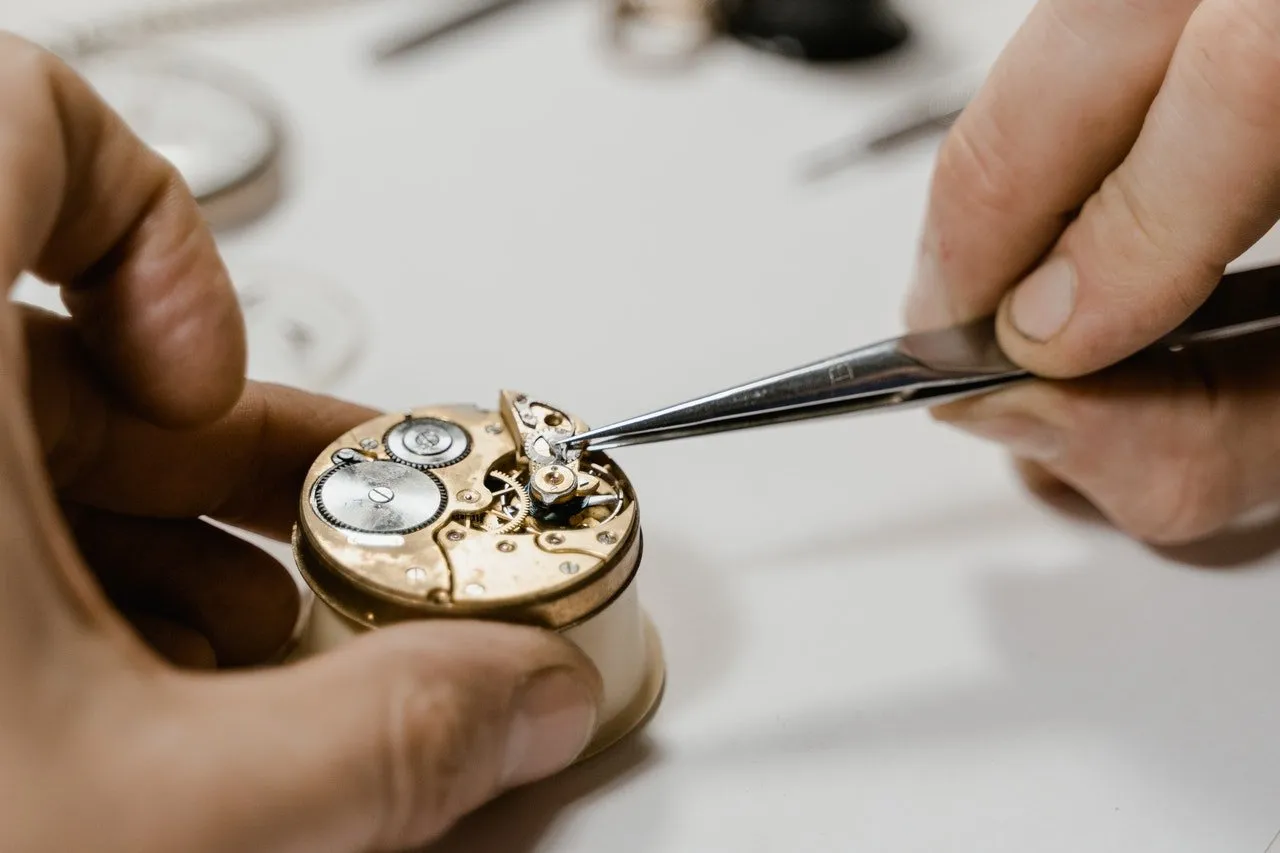
A product comes in, sometimes stays in the shop for days or weeks, and may go on to an external goldsmith or supplier. Without a proper process, confusion sets in quickly. A professional repairs process might run like this:
- 1. Intake: who is the customer and what product is being handed in?
- 2. Description: what needs to be done to the product?
- 3. Photo: take a photo on receipt where relevant.
- 4. Quote: work out the expected cost.
- 5. Approval: the customer signs off.
- 6. Job sheet: the repair is logged as a job.
- 7. Workshop: the repair goes to the in-house or external workshop.
- 8. Status: progress is tracked.
- 9. Customer update: notify the customer once the repair is ready.
- 10. Collection and payment: the repair is paid for and handed over.
- 11. History: the repair stays linked to the customer.
The same principle applies to wedding rings, bespoke work, engraving, battery replacement, watch straps, second-hand gold, valuations and servicing. Record these processes digitally too, and you get one complete customer picture instead of five separate records. Our guide on optimising the repair process covers this step by step.
Step 15. Use data to steer your shop
A system is only valuable once you use the information to make better decisions. Regularly review revenue, number of transactions, average order value and revenue per staff member, category and brand. Add margin per category and brand, plus stock value, stock turnover and slow-moving items. Also track new and returning customers and your online conversion rate.
Say you sell a gold ring for £650. With fragmented processes, you'd register the sale at the till, manually reduce the stock, take the item offline, add the purchase to your CRM, process the sale in your bookkeeping and update a spreadsheet. In an integrated system, one sale triggers most of those actions automatically — and your sales statistics immediately give you reliable figures.
5. A successful launch and the first 100 days
Step 16. Prepare your staff and processes
Make sure staff know not just your products, but also how the shop runs. Create simple procedures for opening and closing, receiving goods, processing stock, sales and returns, taking in repairs, webshop orders and closing the till. Test these processes before opening: have staff run through a full delivery, sale and repair. Also make clear who is responsible for which task.
Step 17. Start marketing before you open
Don't wait for opening day to build awareness. Start weeks or months in advance with your website and Google Business Profile, social media, local media, email, invitations and partnerships with local businesses and suppliers. Choose the channels where your target customer is active; you don't need to be everywhere. Ask your first customers actively for reviews, as strong reviews help new customers trust you.
Step 18. Prepare thoroughly for opening day
Think about invitations, an opening offer, staffing, suppliers, local media, food and drink, extra security, photography and social media. Consider running a soft opening first with a limited group of customers, so you can test that the till, card machine, stock, webshop and processes all work properly.
Step 19. Use the first 100 days to learn
Opening day is only the beginning. The first few months give you information you didn't have before opening: real sales data. Track, for example, weekly:
| KPI | What it tells you |
|---|---|
| Revenue | How much are you selling? |
| Number of transactions | How many customers are buying? |
| Average order value | How much does a customer spend? |
| Gross profit | What's left after cost of goods? |
| Stock value | How much money is tied up in stock? |
| Stock turnover | How quickly do you sell products? |
| New customers | Is your customer base growing? |
| Returning customers | Do customers come back? |
| Repairs | How much extra revenue is this generating? |
| Webshop revenue | How is online selling performing? |
Step 20. Adjust your range and processes
After a few months you'll have a much clearer picture of which brands sell well, which price points are popular, which products aren't moving, which categories carry the best margin, and where staff are losing time. Buy more of what works and less of what doesn't. The same applies to your processes: are you seeing frequent stock discrepancies, does taking in repairs take too long, or is data being entered twice? Fix the biggest bottleneck first.
From new business owner to a healthy jewellery business
A successful jewellery business isn't built on one good decision, but on a combination of a clear concept, the right target customer, a sound financial plan, a well-matched range, a good location and shop, efficient operations, professional marketing, and continuously measuring and improving all of it.
You don't need everything to be perfect on opening day. What matters most is that you know what's happening, have your processes under control, and can adjust quickly. A modern jeweller uses more than just a till for this — they run a business where products, stock, sales, customers, webshop and repairs come together as much as possible. That gives you the oversight not just to open a jewellery business, but to genuinely build a healthy one.