
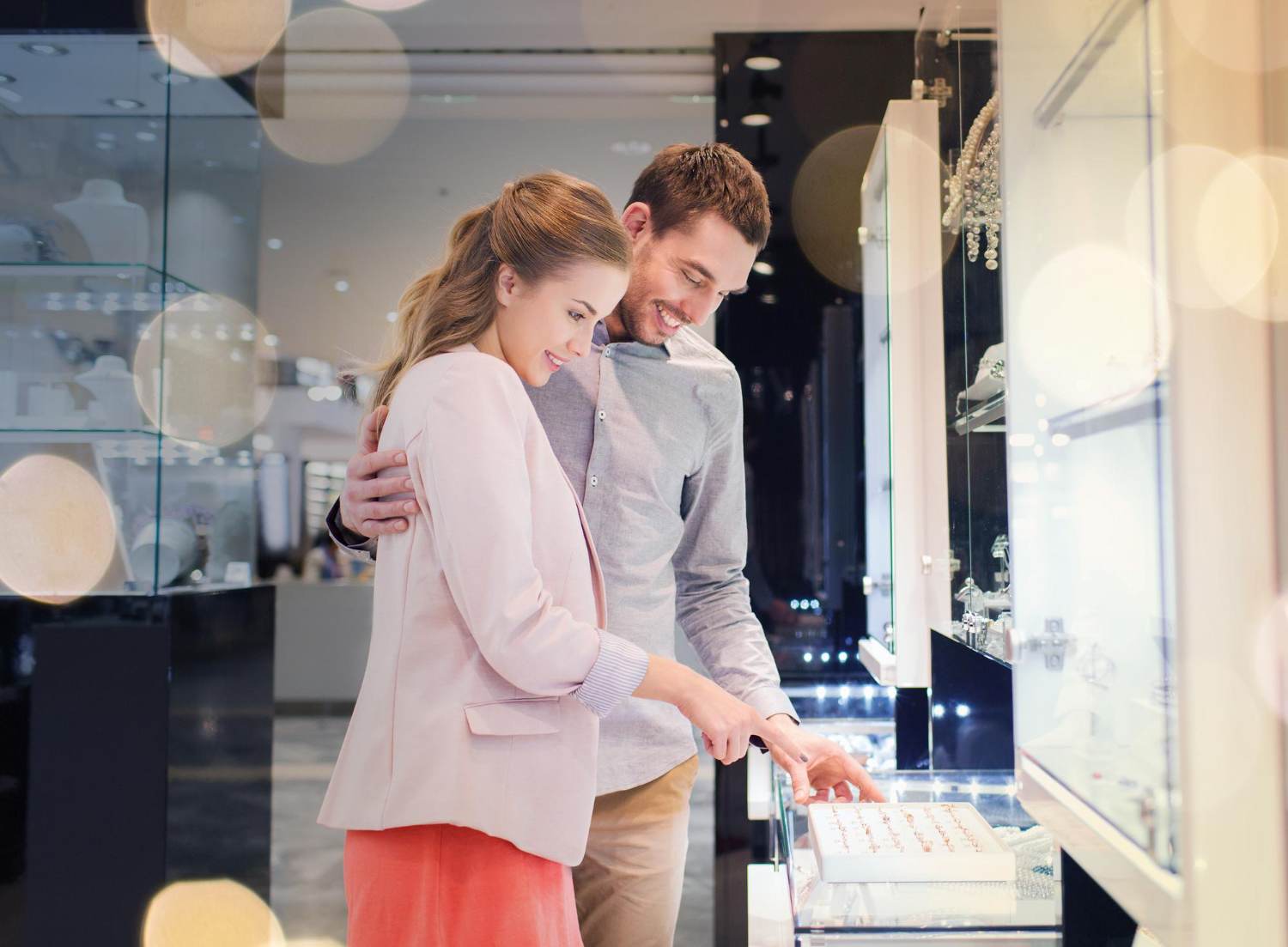
A customer looking for a jeweller today does not always start by wandering down the high street. The search often begins online. Someone might search Google for a jeweller nearby, discover a new collection on Instagram, or check the website first before deciding to visit the shop.
In a short space of time, a customer can have several touchpoints with your jewellery shop:
- finding your business through Google;
- browsing your Instagram profile;
- visiting your website;
- reading reviews from other customers;
- looking at your collection and brands;
- asking a question over WhatsApp;
- comparing prices and products;
- and finally coming into the shop.
That does not mean the physical shop matters less. Quite the opposite. With jewellery in particular, personal advice, trust, experience and craftsmanship all play a major role. Online marketing mainly helps to ensure customers find your shop and have a reason to step inside.
Marketing for a jeweller is therefore about far more than adverts, promotions or discounts. It is about being visible at the right moment, building trust, inspiring customers and making sure a first visit eventually grows into a lasting relationship.
What is good marketing for a jeweller?
Good marketing starts with understanding the full customer journey:
Discover → Consider → Visit → Buy → Return → Recommend
A customer might discover you through Google, find inspiration on Instagram and then look for more information on your website. They may then get in touch over WhatsApp and finally come to the shop for personal advice. After the purchase, good service and relevant communication can bring them back — and encourage them to recommend your shop.
That is why marketing is not made up of a single channel or a single campaign. It is about how the different parts of your business work together:
- Google helps new customers find you;
- social media helps you inspire people and put a face to your business;
- your website gives customers information and builds trust;
- WhatsApp makes personal contact easy;
- the shop is where expertise, advice and experience really come into their own;
- CRM and customer communication help you continue the relationship after the sale.
The best marketing happens when all these pieces reinforce one another. In this guide we cover 15 practical strategies to help you as a jeweller reach more customers, generate more shop visits and encourage existing customers to come back. Want to see how those channels connect on a technical level? Read more about jeweller digitalisation.
Part 1 — Make sure customers find you
1. Make sure you rank well on Google
When someone is looking for a jeweller, the search often begins with a specific query. For example jeweller in [town], wedding rings [town] or watch repair [town]. It is therefore important for your jewellery shop to be visible for searches that match your products, services and location. This is also known as local SEO.
Start with your Google Business Profile
Your Google Business Profile is a key part of your local visibility. This is the listing potential customers see in Google and Google Maps, among other places. Check regularly that your profile is complete and up to date. Make sure you always have:
- the correct business name and category;
- your current address and correct opening hours;
- your phone number and website;
- appealing photos of your shop and collection;
- the brands you sell and the services you offer;
- up-to-date information about public holidays and altered opening hours.
Do not think only in terms of a general business description. Make it clear what you sell and which services you offer. If you sell wedding rings and watches, and offer repairs too, make sure that is visible online.
Think in terms of local searches
Do not aim only to be found for general search terms like jeweller or jewellery. For a local shop, more specific searches are often far more valuable:
- Jeweller in [town]
- Wedding rings [town]
- Jewellery repair [town]
- Watch repair [town]
- Buy a gold ring [town]
- Jeweller for engagement rings [town]
Someone searching that specifically usually already has a clear need. Your goal is to be visible at that moment and offer enough information for them to choose your shop.
2. Actively collect reviews
A potential customer might find your jewellery shop online, but that does not mean they have chosen it yet. Especially when someone does not know you, other customers' experiences play an important role. So actively ask for reviews whenever a customer is happy with your service. The best moment is often right after a positive experience:
- after a successful purchase;
- when a repair has been completed to satisfaction;
- after a bespoke order;
- after delivering a special product;
- when a customer spontaneously pays you a compliment.
Then make it as easy as possible. Give the customer a direct link to your review page or make asking for a review part of your standard customer process.
Respond to reviews
Take the time to respond to reviews too. A short, personal reply shows that you take the trouble to listen to your customers. That also applies to a negative review. Respond calmly and professionally, and try to resolve the issue away from the public review platform where possible.
3. Turn your website into a marketing channel
A website does not have to be just an introduction to who you are. Use it above all to help potential customers make a decision. A visitor should be able to quickly discover:
- where your shop is located and when you are open;
- which brands and collections you offer;
- which services you provide and which products are available;
- what your shop looks like;
- how to get in touch, including via WhatsApp;
- whether they can book an appointment or reserve a product.
Practical information deserves attention too. Do you have your own workshop, sell wedding rings or repair watches? Create a clear page for your key services. That way both visitors and search engines can better understand what they can come to you for. With a website builder for jewellers you can build those pages without needing technical skills.
Make your website reflect your shop
Your website is not a separate part of your business. Its look and content should reflect the experience you want to offer in your shop. Use good photos of your own shop and staff, and show what makes your business special.
A good website does more than give information — it also makes the next step easy:
Get in touch → book an appointment → reserve → visit the shop
The less effort it takes to make that move, the greater the chance an online visitor becomes an actual customer. Do you also sell online? Then a webshop connected to your stock helps keep availability accurate at all times.
4. Use social media to inspire
Social media gives jewellers an excellent way to showcase their collection, expertise and personality. But being successful on Instagram or Facebook does not simply mean posting as often as possible. Start by thinking about what your audience finds interesting. You could, for example, show:
- which new collection has arrived;
- how different pieces of jewellery can be combined;
- how a particular style can be worn;
- what makes a special product unique;
- how a piece of jewellery is made or repaired;
- which products your staff love themselves;
- what happens behind the scenes;
- what an event in your shop looks like;
- questions customers regularly ask;
- short videos with practical advice.
Document instead of constantly inventing new content
One of the simplest ways to create more content is to show what you are already doing. Has a new collection arrived? Film the unboxing and talk about the pieces that catch your eye. Does a member of staff know a lot about a particular watch brand? Let them talk about it. You do not need a professional studio or an elaborate marketing campaign. Your knowledge, staff and daily work are already a source of content.
What is more, personal content often works better than product photos alone. Customers get to see not only your collection, but also the people and expertise behind your jewellery shop. For more ideas per channel, see our page on marketing for jewellery shops.
Part 2 — Make jewellery more appealing
5. Turn your shop window into a reason to step inside
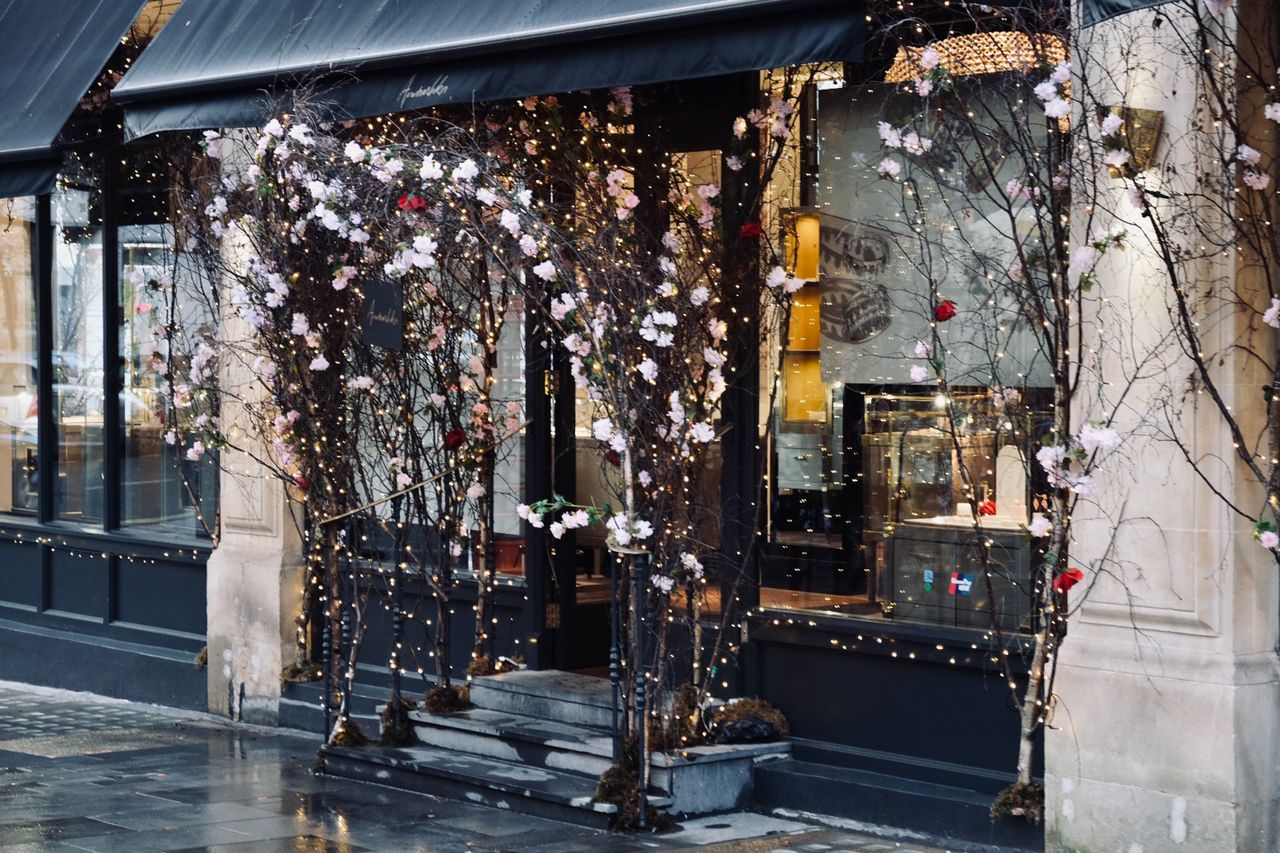
Your shop window is often the first touchpoint with passers-by. A window crammed with products but with no clear story achieves little. A window built around one clear theme — a new collection, wedding rings, a season or a gifting occasion — gives people a reason to stop.
- pick one theme per period and keep the display calm;
- change the window regularly so regular passers-by see something new;
- use good lighting so details and materials are visible;
- show combinations rather than individual products;
- make clear which services you offer inside.
6. Present jewellery in a way that makes choosing easier
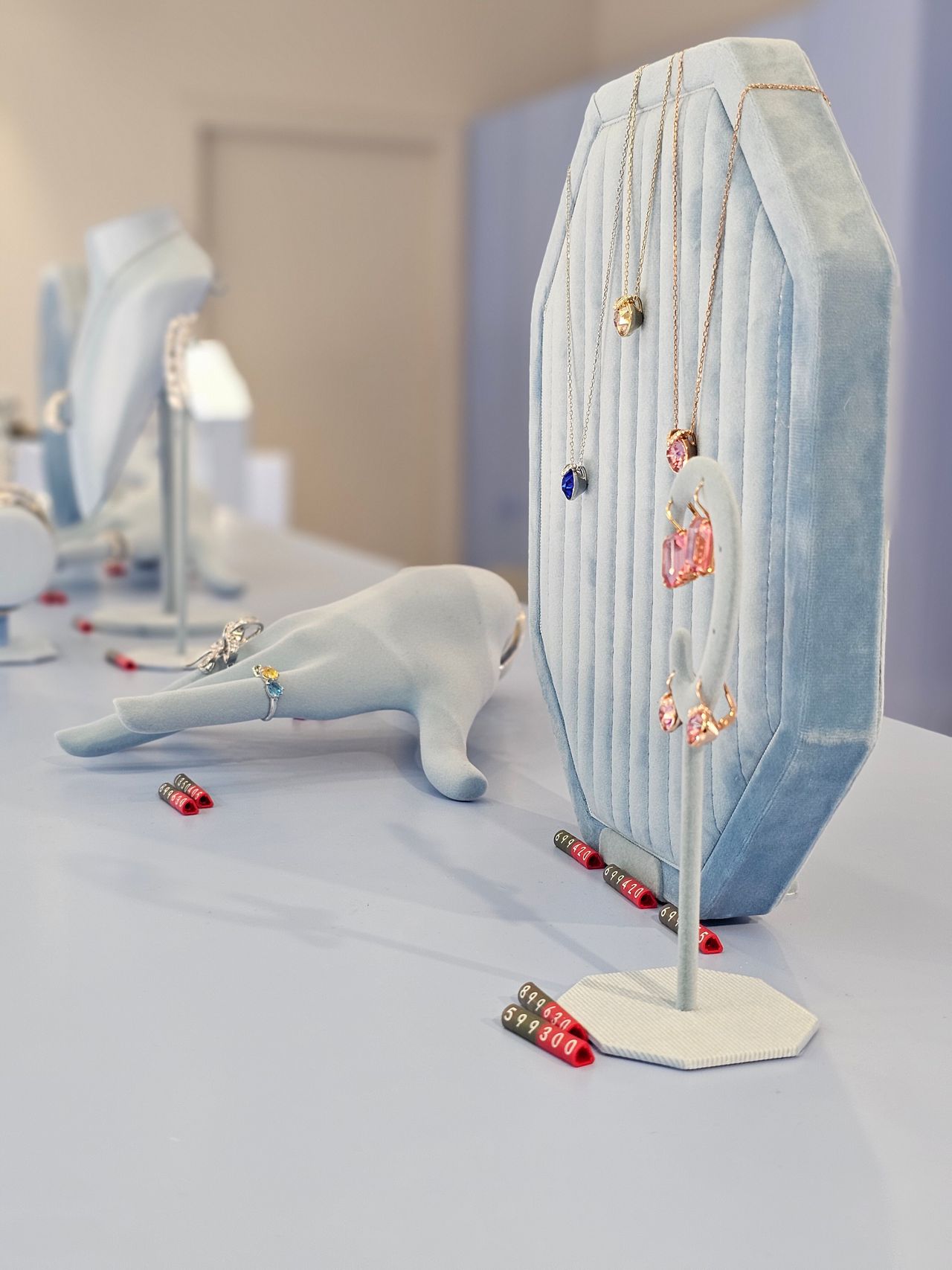
A customer given too much choice often chooses nothing at all. Group jewellery into recognisable combinations: a necklace with matching earrings, a bracelet with a watch, a set of rings, or several layered necklaces. This gives inspiration without pushing a sale straight away.
Give different price points a place
Not every customer has the same budget. Make sure your display is not focused solely on the most expensive or eye-catching products. This is not about "cheap" versus "expensive", but about value and choice. A £150 piece might be exactly right for one customer, while another is after an exclusive item at £2,000.
Present products in the right context
A piece of jewellery on its own only tells part of the story. Show, where possible, how it can be worn — in the shop through combinations and styling, and online with good photos that actually show a ring being worn, several pieces combined, or the details clearly visible.
7. Sell not just the piece, but the story
A piece of jewellery often carries meaning that goes far beyond the material, brand or price tag. A ring can be a sign of love. A watch can mark a milestone. A necklace can represent a memory of someone special.
That is why, when presenting a piece, it is worth explaining not only what a product is, but also why someone would want it. Compare, for example, "14-carat gold necklace, 45cm" with "A timeless gift to mark a special milestone." The product information still matters, but the second message speaks to an entirely different need.
Who would find this piece interesting? For which moment? And what feeling or meaning could it carry?
8. Tap into key buying moments
Many jewellery purchases centre on a specific moment: a birthday, anniversary, engagement, wedding, birth, graduation, Valentine's Day, Mother's Day, Father's Day or Christmas. Make the most of that by aligning your range and communication with these moments.
Compare "Browse our new collection" with "Looking for a special gift for a 25th anniversary?" The second message immediately helps the customer connect a product with a concrete need. That way your range shifts from being a collection of products to a collection of solutions for different moments. For personal requests, bespoke and custom orders help you deliver beyond your standard range too.
Part 3 — Turn interest into shop visits
A potential customer can be interested in a piece of jewellery without coming straight to your shop. They might still have a question, want to know if a product is available, or want to be sure a visit is worthwhile first. That is exactly the moment where you can make the difference.
9. Make WhatsApp part of your sales process
For many customers, sending a message is easier than calling or filling in a contact form. WhatsApp lowers the barrier to asking a question: "Do you have this style in size M?", "Can I come in tomorrow for wedding rings?" or "Do you have this watch in stock?"
These may look like simple questions, but they are valuable sales moments. The customer is already interested and just needs enough reassurance to take the next step. You can then:
- check availability;
- send extra photos or videos;
- suggest an alternative;
- reserve a product for the customer;
- arrange an appointment;
- let the customer know when they can come and see the product.
A reply like "Yes, we have that style" is useful. But even better is: "Yes, we currently have this style in stock. I can set it aside for you. Would you like to pop in tomorrow to take a look?" That turns a simple product question into a concrete invitation to the shop. For common questions outside opening hours, a chatbot for jewellers can handle the first response.
10. Run events that bring customers into your shop
An event gives customers a concrete reason to visit your shop. Rather than waiting for someone to decide to walk in, you create a moment you can actively invite people to:
- launch of a new collection;
- VIP evening;
- wedding rings evening;
- styling evening;
- jewellery care workshop;
- watch event;
- valuation or appraisal day.
An invitation to "a fun evening in our shop" is weaker than a concrete reason, such as "Discover our new wedding ring collection" or "An evening on jewellery care." A clear reason makes it easier for customers to decide whether the event is worth their time.
The success of an event does not have to be measured only in sales made on the night. A good event delivers footfall + experience + trust + relationship + word of mouth. Note down who showed interest in a particular collection or wanted to book an appointment, so an event becomes part of your longer sales process rather than a one-off activity.
11. Partner with other local businesses
You do not have to reach every new customer yourself. In your own area there are likely businesses already in touch with exactly the audience you want to reach: bridal shops, wedding planners, photographers, florists, fashion shops, beauty salons and hotels.
Reach new audiences through businesses that already have that audience's trust.
A partnership does not have to be complicated. Organise an evening for engaged couples together with a bridal shop and a local photographer, for example. Other options include a joint customer evening, a temporary display in each other's shop, a joint social media campaign, a gift voucher or package deal, a local shopping trail, or simply recommending each other to customers.
Preferably choose partners that genuinely fit your shop. It is not about having as many partnerships as possible, but about relevant ones where both sides add value.
Part 4 — Turn customers into repeat customers
Attracting more customers matters, but a successful jeweller also makes sure customers come back. A customer who has already bought from you knows your shop. Trust has been built, and you hold valuable information about earlier purchases and preferences.
12. Use customer data to communicate more personally
Not every customer wants the same information. Keeping good customer records lets you make communication more relevant. Think earlier purchases, birthdays, anniversaries, favourite brands, purchase categories, preferences, past repairs and interests.
A customer who previously bought an engagement ring is in a different situation from someone who recently bought a watch. The difference is not in sending more messages, but in sending more relevant ones. The POS system for jewellers is the natural place where that customer information is captured automatically during the sale.
Only collect information you will actually use. What matters most is that customer data is properly recorded after a purchase, appointment or service contact — and can be put to use later. That way your customer base becomes more than a list of names and email addresses.
13. Use email marketing to bring customers back
Email is a relatively simple way to stay in touch with existing customers. You can inform customers about new collections, events, birthdays, anniversaries and personal offers, or reach out to customers who have not bought anything for a while.
But a good email strategy does not start with writing a newsletter. It starts with relevant customer data and good segmentation. A new watch collection does not need to go to every customer; a customer who has previously shown interest in watches is far more relevant. Read more about email marketing for jewellers.
14. Use repairs and service as valuable touchpoints
Not every customer relationship starts with a major purchase. A customer may also come to you for a repair, cleaning or polishing a piece of jewellery, replacing a battery or watch strap, an engraving, or resizing a ring.
These are important moments in the customer relationship, because a customer physically comes into your shop and you have the chance to demonstrate your craftsmanship and service.
A repair is not a sales pitch. First and foremost, it is a service and trust-building moment.
A good service experience naturally creates new opportunities. A customer having their ring resized might later be interested in a matching piece. Record relevant information properly and use it later when there is a genuine reason to get back in touch. With repair software for jewellers you can keep track of status and history per customer — and you can read how to structure that process in our article on optimising the repair process.
15. Build lasting customer loyalty
Loyalty does not only come from offering a customer a discount. Especially at a jeweller's, trust, expertise and personal attention can matter far more. You can strengthen that relationship with:
- personal attention;
- exclusive previews of new collections;
- VIP evenings and personal invitations;
- relevant communication;
- loyalty programmes;
- personal service.
A discount offer might encourage someone to buy again, but exclusivity often works harder: "As a loyal customer, we'd love to invite you to a preview of our new collection." That makes the customer feel part of your shop. A loyalty programme for jewellers makes that attention repeatable without extra admin.
The goal is not to sell to customers as often as possible, but to make sure your jewellery shop remains the obvious choice whenever a special moment, purchase or service need arises again.
Promote smarter: advertising is just one part of marketing
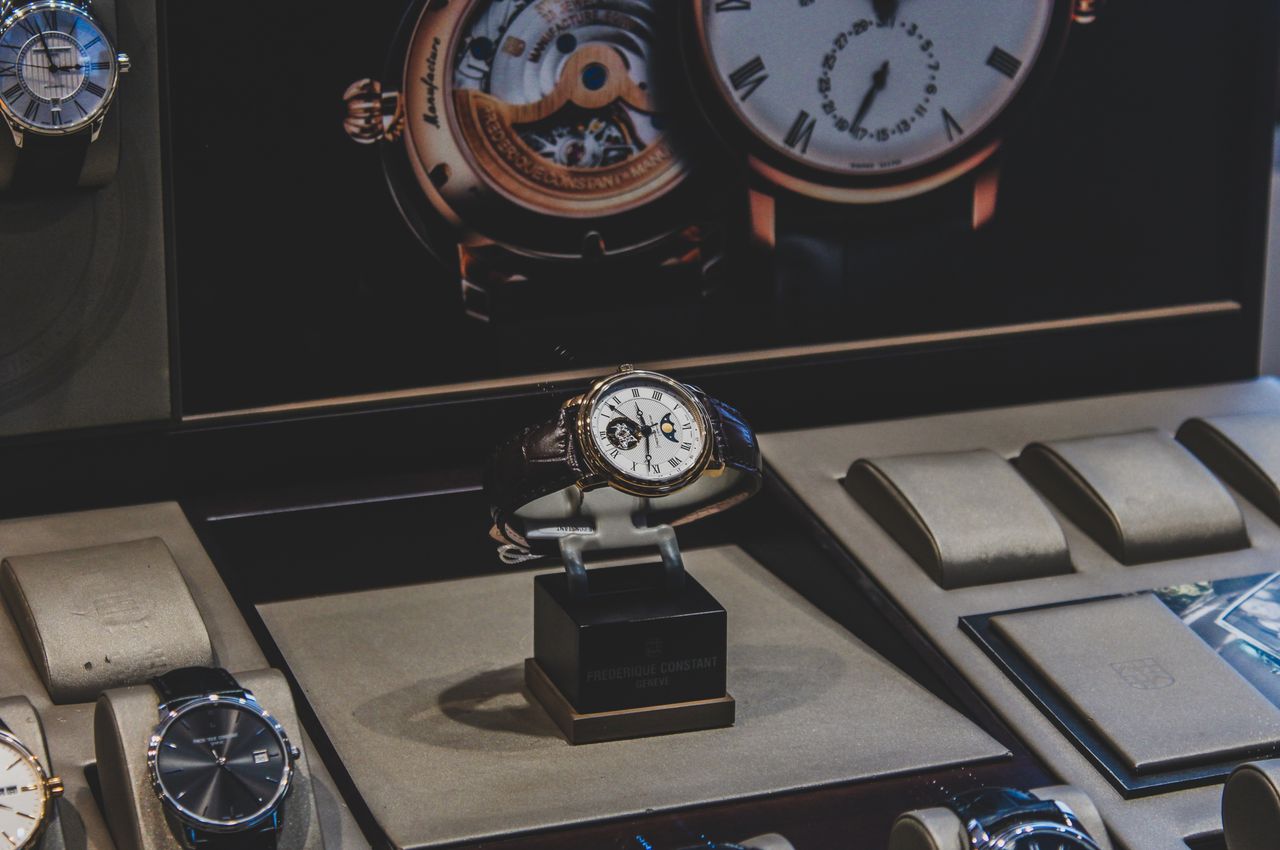
Once the foundations of your marketing are in place, you can choose to buy extra reach through Google Ads, Instagram and Facebook adverts, local campaigns, influencers or promotions. The difference is that advertising buys reach, while good marketing also builds visibility, trust and customer relationships.
An advert can bring someone to your website. But if the website is outdated or the customer sees no reason to get in touch, extra reach achieves little. That is why the order matters:
visibility → trust → website → contact → shop visit → sale
Consider local micro-influencers too
An influencer does not need hundreds of thousands of followers to be worthwhile for a local jeweller. A local content creator with a few thousand engaged followers from your own area can be far more relevant than someone with huge national reach. Look for an audience that fits your shop, a strong local presence, trust among followers, engagement with the content, and a style that matches your brand.
5 marketing mistakes jewellers often make
1. Only posting on social media when there is something to sell
If every post ends with a product and a price, your social media channel quickly becomes a digital shop window. Show your expertise, inspiration, staff, craftsmanship and shop too.
2. Relying on discounts alone to attract customers
A discount can boost sales in the short term, but if you communicate on price as a matter of routine, it becomes harder to stand out. Sell the value of your shop, not just a lower price.
3. Valuing new customers more than existing ones
Existing customers have already chosen you and know your service. Personal communication, invitations and good service encourage them to buy from you again and recommend your shop.
4. Treating your online and physical shop as two separate worlds
A customer does not think in terms of "online" and "offline". They might look at your Instagram at home, visit your website at work, ask a question over WhatsApp, and then come to your shop. Make sure information, look and service are all consistent.
5. Only measuring likes and reach
More followers is nice and more reach is interesting, but ultimately you want to know if marketing contributes to your business results. Look further, at shop visits → sales → repeat customers. The sales statistics from your POS system show which activities are actually driving revenue.
Get started in 30 days
Week 1 — Become easier to find
- Check and fully complete your Google Business Profile.
- Add up-to-date photos of your shop and collection.
- Make a list of local search terms that fit your shop.
- Ask five happy customers for a review.
Week 2 — Improve your online presence
- Check whether your website answers customers' key questions.
- Create a clear page for your most important services.
- Put WhatsApp clearly on your website.
- Plan four social media posts based on what you already do.
Week 3 — Activate existing customers
- Check what customer data you already have available.
- Decide which customer group is relevant for a specific message.
- Come up with a relevant campaign and send a personal email.
- Note down the responses and visits that result.
Week 4 — Work locally
- Approach a relevant local business.
- Come up with a joint activity or event.
- Look into whether a local micro-influencer fits your shop.
- Measure where visitors and new customers come from.
Start small, measure what happens, then build further
A good marketing strategy for a jeweller does not come from a single campaign. It is a process in which you keep discovering which message, which channel and which activity brings the right customers into your shop.
It comes down to more relevant customers, better customer relationships, and a jewellery shop people are glad to come back to.